We don’t build AI features. We design AI platforms. That requires choosing technologies that support real-time interaction, multi-tenancy, security, and long-term evolution — not quick demos.
We are inspired by organizations that treat technology as an enabler of people — not a replacement for them.
We draw from systems thinking, organizational design, and real-world operations — not just AI research.
The best AI solutions feel invisible: they reduce friction, simplify complexity, and quietly improve outcomes.
This diagram illustrates how AI platform is structured — from voice interaction to secure, multi-tenant intelligence and tools. Each layer is intentionally separated to support scale, governance, and long-term evolution.
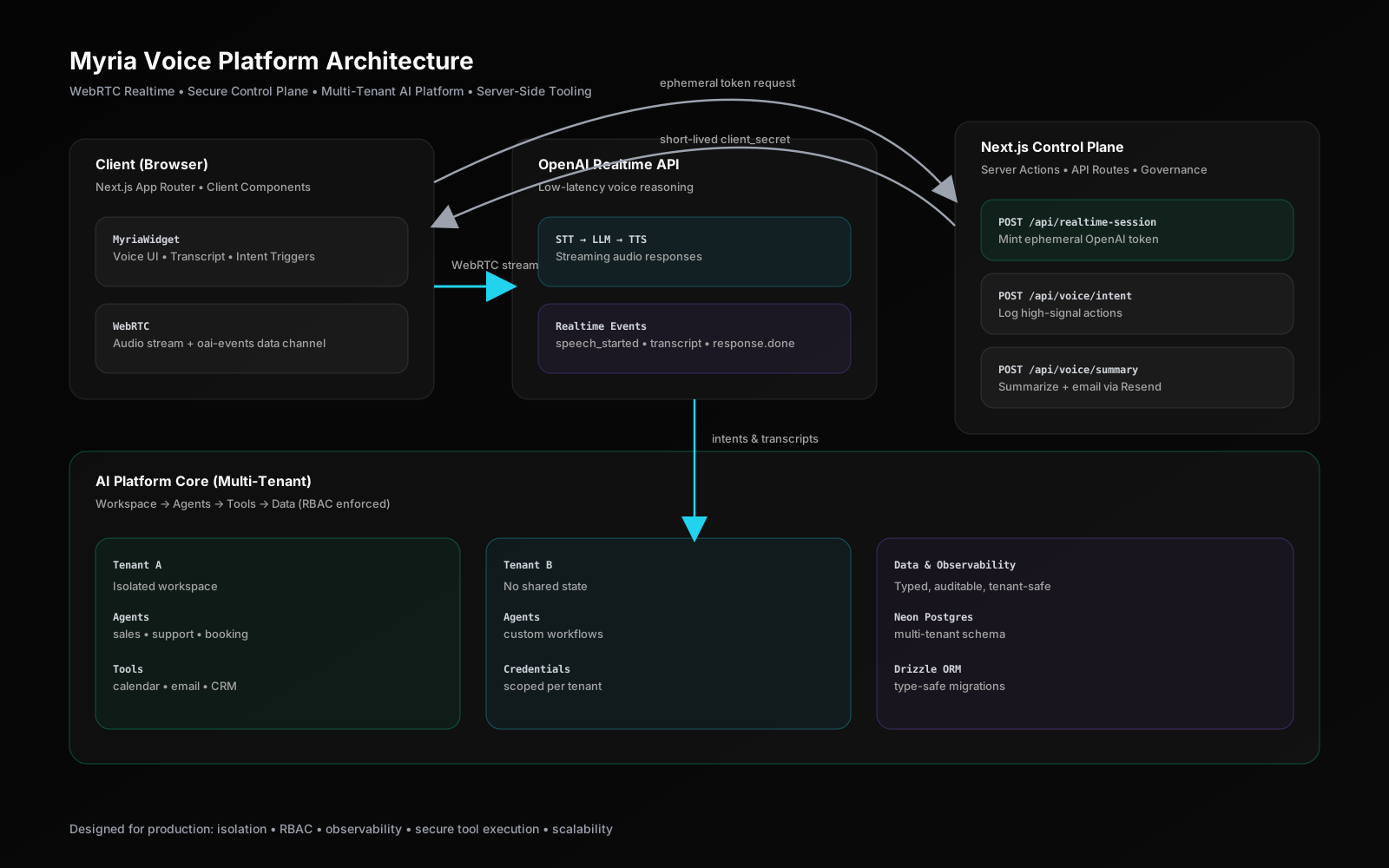
Voice Interface is the entry point. Users interact naturally through speech, lowering friction and increasing engagement.
Realtime AI Layer handles streaming audio, reasoning, and responses using secure ephemeral sessions. The browser never holds long-lived credentials.
AI Platform Core manages agents, intent, permissions, and orchestration. This is where business logic lives — not in prompts.
Tools & Integrations (calendar, email, CRM, internal APIs) are executed server-side, ensuring secrets, auditability, and control.
Data Layer enforces tenant isolation, role-based access, and observability across conversations, actions, and outcomes.
Voice-first AI requires ultra-low latency, streaming audio, and bidirectional communication. This layer is critical for trust and engagement.
We design AI as a system of agents — not a single prompt. Each agent has intent, context, permissions, and responsibilities.
A modern AI platform must be fast, accessible, and maintainable. Frontend decisions directly impact adoption and usability.
AI without data isolation is a liability. From day one, we design for workspaces, roles, and separation of concerns.
Security is not a feature — it is an architectural posture. We build with a SOC2-aligned mindset from the start.